Tumour Lysis Syndrome
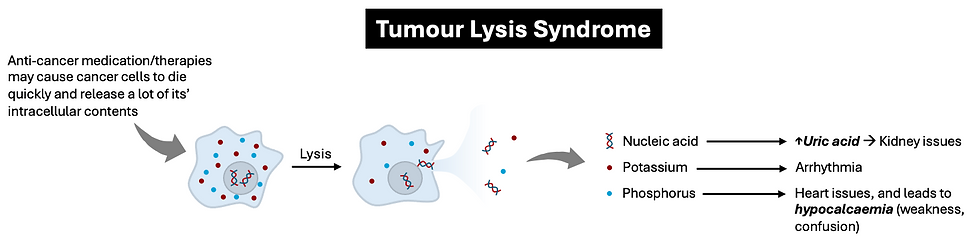
Tumour Lysis Syndrome is the rapid death of tumour cells by chemotherapy, leading to a massive release of intracellular contents.
This typically presents in an acute leukaemia/lymphoma patient presenting 2 days after receiving high-dose chemotherapy with dysuria/oliguria, abdominal pain, or weakness.
Investigations
ECG
U&Es - raised potassium and phosphate
Uric acid - raised
Calcium - low (this is due to the high phosphate)
N.B. Raised UPP (uric, potassium, phosphate) + Low calcium
The hallmark of this condition is the Raised Uric acid!
Management
Correction of electrolyte abnormalities + IVF
Rasburicase (recombinant form of urate oxidase) for high risk patients to transform uric acid into allantoin, which is more easily excreted by the kidneys - It can be given prophylactically or therapeutically
Allopurinol has limited therapeutic benefit in established TLS, but can be used prophylactically in the lower risk patients
Important Links: